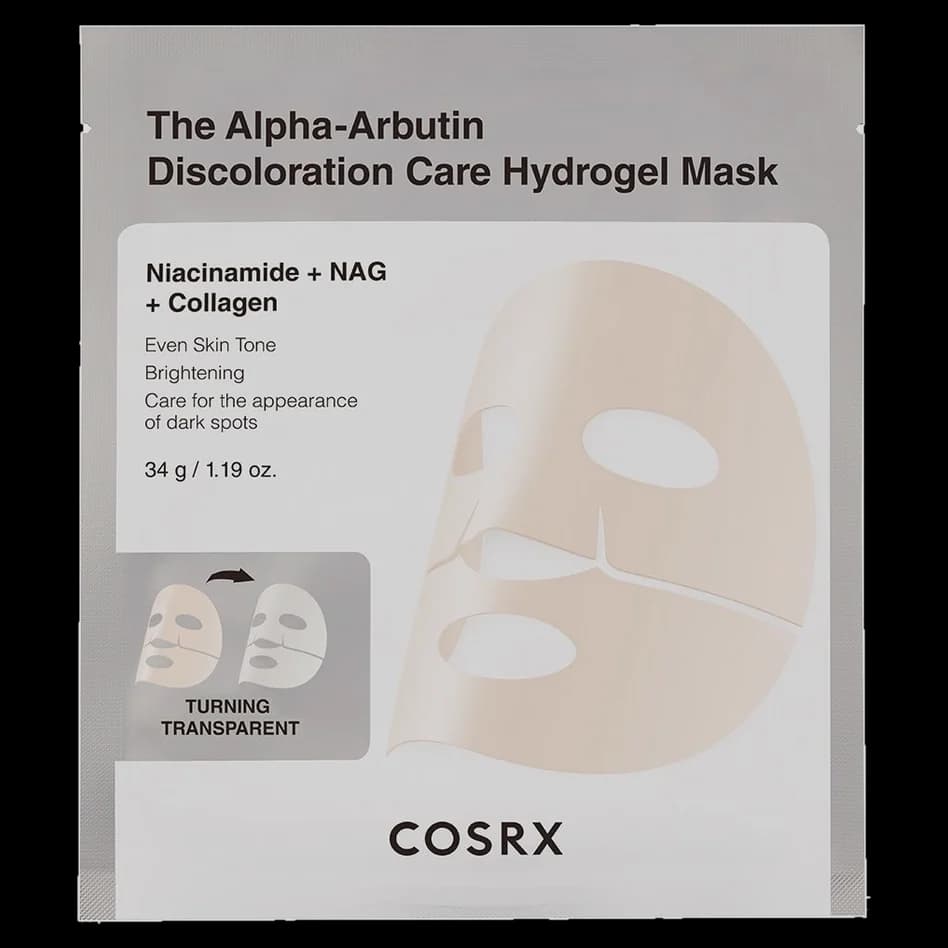
Alpha-Arbutin
EU-restricted, a common contact allergen, or subject to live debate.
Also written as: α-Arbutin · 4-Hydroxyphenyl-alpha-D-glucopyranoside
What it is
Alpha-arbutin is a synthetic isomer of arbutin in which the glucose is attached with the opposite orientation, which makes it more stable and a stronger tyrosinase inhibitor than the natural beta form. It is used as a skin-lightening and skin-conditioning agent. Like arbutin it is a hydroquinone-releasing substance, so the EU regulates it with its own Annex III entry and a specific limit on hydroquinone traces.
How it shows up on a label
Alpha-Arbutin and Arbutin are separate INCI names, and a pack prints one or the other. Check which of the two you are reading before assuming they are the same ingredient.
What it does well
Reduces the formation of new pigment
Alpha-arbutin inhibits tyrosinase more effectively than beta-arbutin at the same concentration, slowing melanin production. Independent long-term clinical trials in cosmetic use remain limited.
Moderate evidence
Worth knowing
Hydroquinone traces are capped by law
Because alpha-arbutin can release hydroquinone, a substance banned in EU cosmetics, EU law requires hydroquinone in the finished product to stay at unavoidable trace levels. Products made outside the EU may not be held to this.
Matters most toAnyone buying high-strength brightening products from outside the EU.
Where the EU stands
Concentration-restricted
Permitted in face cream up to 2% and in body lotion up to 0.5%. Hydroquinone in the finished product must stay as low as possible and no higher than unavoidable trace levels. Introduced by Regulation (EU) 2024/996 and fully applicable since 1 November 2025.
Regulation (EC) No 1223/2009, Annex III entry 377 (added by Regulation (EU) 2024/996) · source ↗
Sources (1)
Every link goes to the original: a journal, a PubMed record or an EU document.
- [1]Opinion on the safety of alpha-arbutin and beta-arbutin in cosmetic products (SCCS/1642/22)
SCCS (Scientific Committee on Consumer Safety), European Commission · 2023
The SCCS confirmed that alpha-arbutin is safe at up to 2% in face cream and 0.5% in body lotion, including when used together with beta-arbutin, provided hydroquinone stays at trace levels.