Pumice
Genuinely relevant for some people, or depends on dose and pH.
Also written as: Pumice Powder · Volcanic Ash
What it is
Pumice is a light, porous volcanic rock, ground to a powder for cosmetic use, the same material as the pumice stone used on feet. Its particles are hard and irregularly shaped, which makes it an efficient abrasive. In face masks and scrubs it physically dislodges loose surface flakes. Particle size, edge shape and how hard you rub matter far more than the percentage listed on the pack.
How it shows up on a label
Pumice intended for feet and body is milled far coarser than facial grades; a body scrub is not a face mask substitute.
What it does well
Removes loose surface flakes immediately
Mechanical exfoliation demonstrably thins the stratum corneum and changes barrier measurements, which is the same mechanism behind the visible smoothing people notice straight after use.
Moderate evidence
A biodegradable mineral replacement for plastic microbeads
EU law has banned synthetic polymer microparticles used as abrasives since 17 October 2023, and natural mineral grits such as pumice are one of the compliant alternatives.
Strong evidence
Worth knowing
Abrasive particles can irritate, especially on inflamed skin
Coarser pumice grades have sharp edges. Scrubbing over active spots or rosacea tends to spread inflammation and prolong redness rather than clear it.
Matters most toPeople with sensitive or rosacea-prone skin, active acne, or anyone using retinoids or acids.
Temporarily disrupts the skin barrier
Studies of mechanical exfoliation show transepidermal water loss rises immediately after treatment and stays raised for about 24 hours, returning to baseline by day two. The widely repeated claim of permanent 'micro-tears' from facial scrubs has not been demonstrated in published human research; what is measurable is short-lived barrier disruption, which becomes a problem only if you scrub before the skin has recovered.
Matters most toAnyone tempted to use a scrub mask more than once or twice a week.
Where the EU stands
Class entry may apply
Pumice is named in none of the annexes of the Cosmetics Regulation and carries no concentration limit of its own. The 2026 aluminium class entry - Annex III entry 381, added by Regulation (EU) 2026/909 - is why that is no longer a complete answer: from 1 January 2027 it caps aluminium in the finished product at 0.89% (as Al) for face and body rinse-off products and 10.59% (as Al) for face leave-on, by composition rather than by name, and none of the entries it excepts names pumice. Pumice is a volcanic glass whose aluminium content varies with the rock it came from, and no primary source settles whether an insoluble volcanic glass counts as an aluminium-containing ingredient for that calculation. The relevant EU rule for scrubs remains the REACH ban on plastic microbeads, which pushed formulators towards mineral abrasives like pumice.
Regulation (EC) No 1223/2009 - no annex entry; Annex III entry 381 (aluminium-containing ingredients), added by Regulation (EU) 2026/909 and renumbered from 379 by the corrigendum at OJ L, 2026/90354, 5.5.2026 · source ↗
Sources (3)
Every link goes to the original: a journal, a PubMed record or an EU document.
- [1]Skin barrier changes induced by aluminum oxide and sodium chloride microdermabrasion
Dermatologic Surgery · 2002 · doi:10.1046/j.1524-4725.2002.01239.x
Both abrasive materials measurably altered the epidermal barrier, which the authors suggest is the mechanism behind the clinical improvement seen after mechanical exfoliation.
- [2]Skin barrier function recovery after diamond microdermabrasion
The Journal of Dermatology · 2009 · doi:10.1111/j.1346-8138.2009.00695.x
Transepidermal water loss rose immediately after mechanical abrasion and at 24 hours, but returned to baseline by day two, suggesting weekly rather than daily use gives skin time to recover.
- [3]Commission Regulation (EU) 2023/2055 amending Annex XVII to REACH as regards synthetic polymer microparticles
EU Commission / EUR-Lex · 2023
Plastic microbeads used to exfoliate, polish or clean have been prohibited in the EU since 17 October 2023, with no transitional period for that use.
Masks that contain Pumice
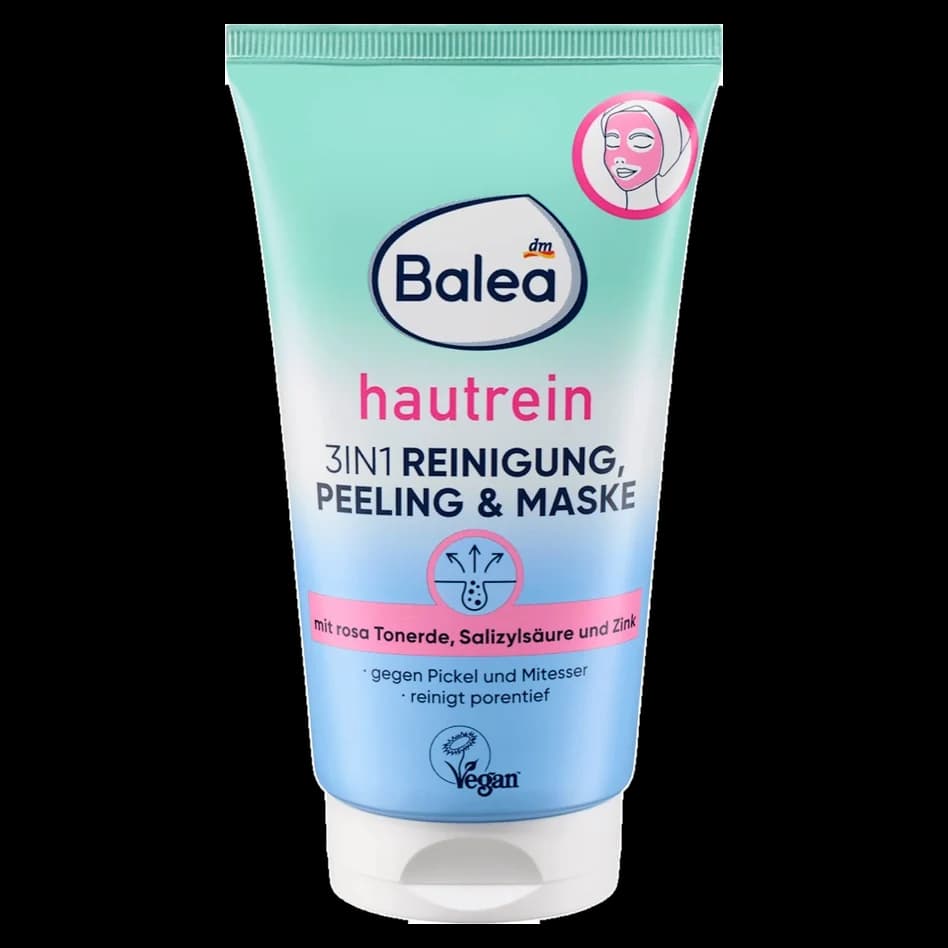
Balea
Reinigung, Peeling & Maske hautrein 3in1
9th of 18 on the label
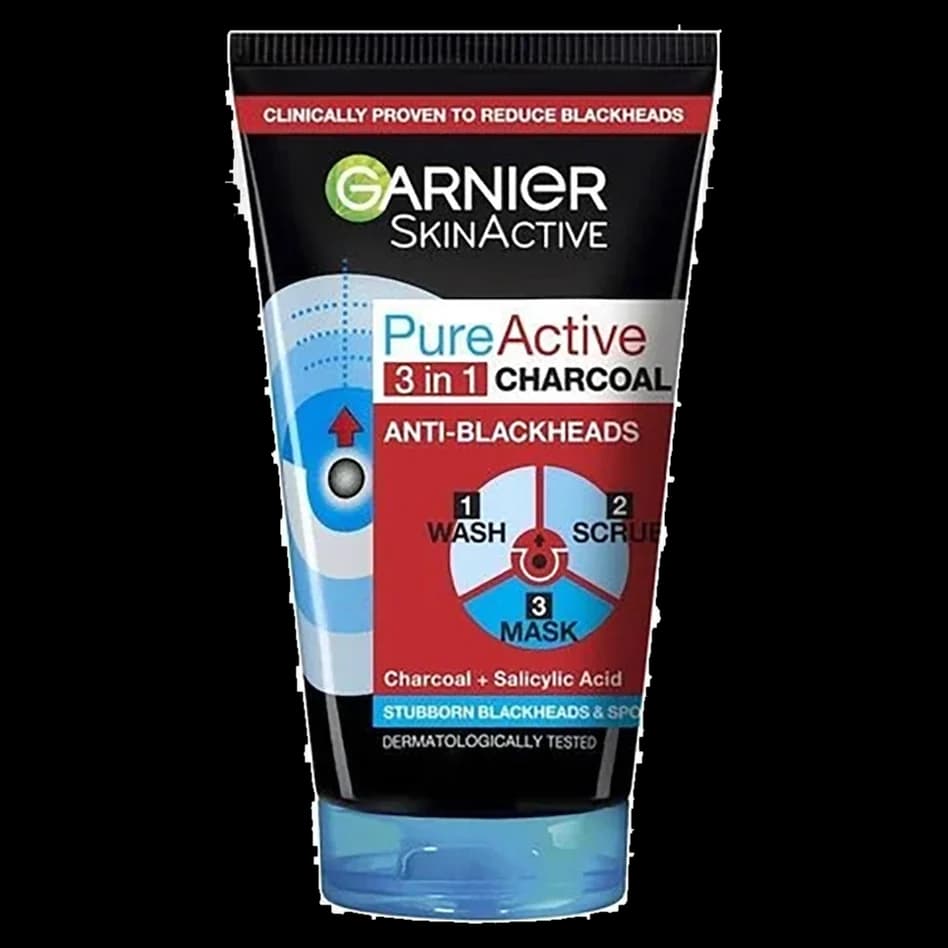
Garnier
Pure Active 3-in-1 Charcoal Wash, Scrub & Mask
11th of 25 on the label
below ≈1%
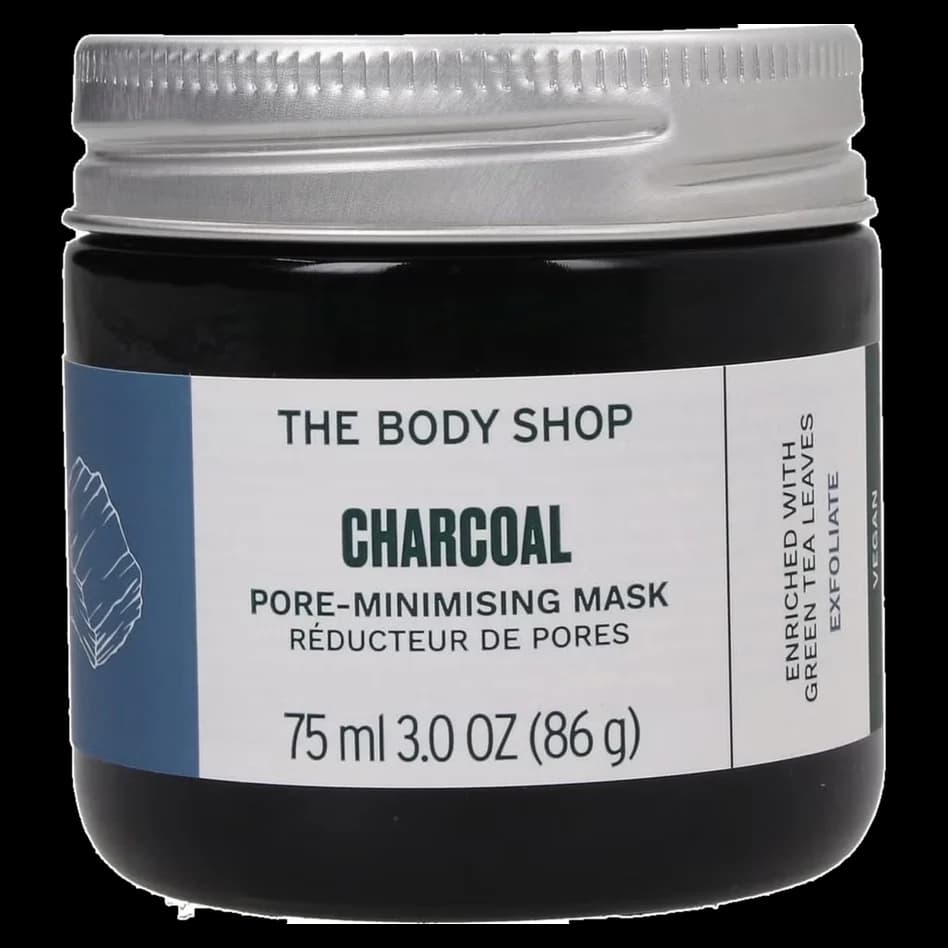
The Body Shop
Charcoal Pore Minimising Mask
7th of 37 on the label
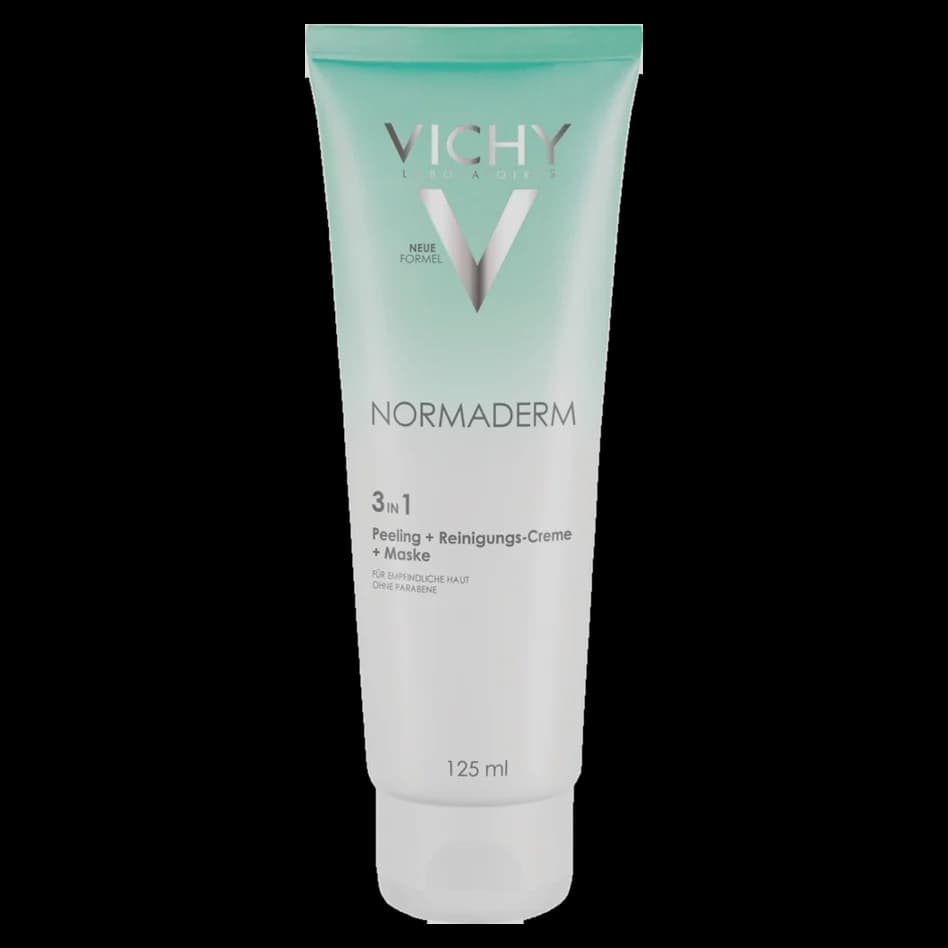
Vichy
Normaderm 3-in-1 Peeling + Reinigungs-Creme + Maske
13th of 23 on the label
below ≈1%