Zinc Ricinoleate
No meaningful concern for most people; irritation is possible but rare.
What it is
Zinc ricinoleate is the zinc salt of ricinoleic acid, and it behaves very differently from the other zinc salts on a mask panel. The Cosmetic Ingredient Review lists it as an anticaking agent, deodorant agent and opacifying agent, which is to say its usual job is binding odour compounds rather than doing anything to skin, and it records its use in deodorant aerosols at up to 2.3% and pump sprays at up to 0.82%. The difference that matters for how it is regulated is physical. The Cosmetic Ingredient Review gives it a formula weight of 660.298 g/mol and an estimated log P of 11.34, and records no water-solubility figure for it at all. For comparison, the same report gives zinc lactate a log P of -2.97 and zinc sulfate -0.07, both recorded as soluble, while zinc stearate - a fatty-acid zinc soap, and practically insoluble - sits at 14.44. Zinc ricinoleate belongs with the soaps.
How it shows up on a label
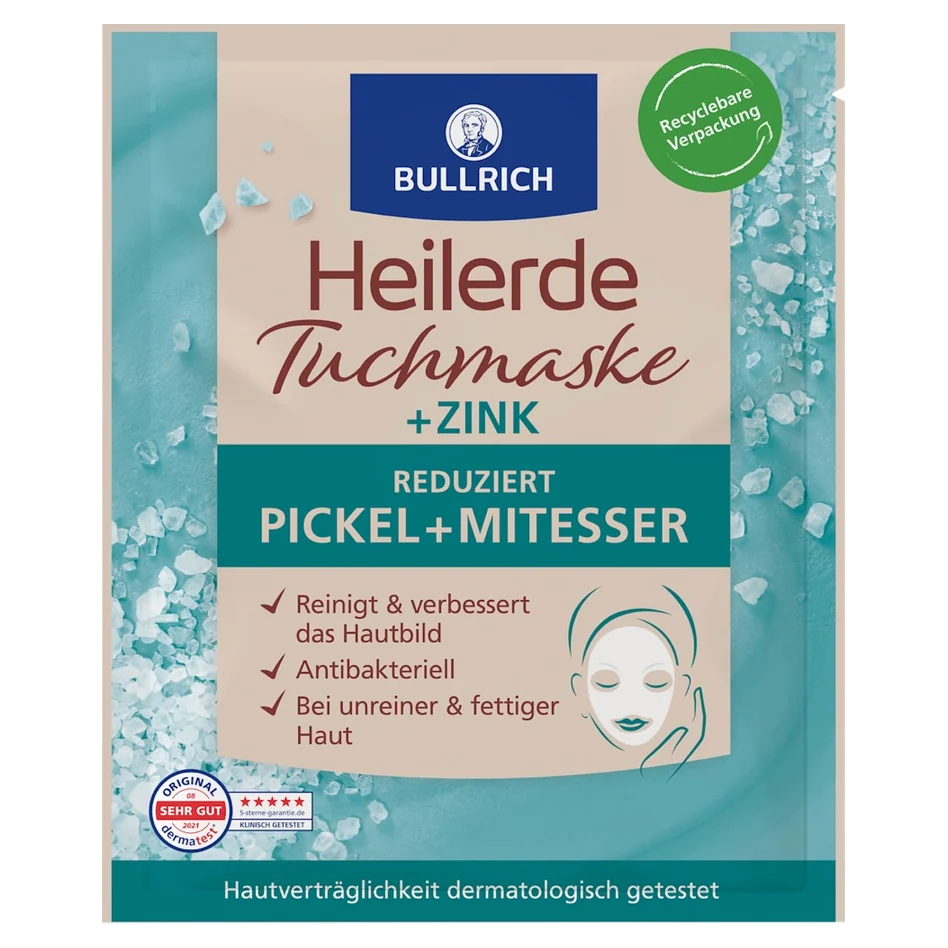
On the one mask here that carries it, it appears in the first half of the list, above two other zinc salts that get two different regulatory answers.
What it does well
Low in acute toxicity, and not a sensitiser in the testing on record
The Cosmetic Ingredient Review records an acute dermal LD50 above 2000 mg/kg in rats, equivalent to more than 198 mg/kg as free zinc, and a trade-name mixture containing it produced no skin sensitisation in a study of 30 guinea pigs. Applied undiluted under occlusion for four hours it was non-irritating to rabbit skin, and in rabbit eyes the report grades it non-irritating, with slight-to-moderate conjunctival irritation in all six animals at 1 and 24 hours that had reversed in all of them by 48 hours, and the iris and cornea unaffected. That is the favourable half of the record; the concentrated-mixture result below is the other half. It was one of the 27 zinc salts the Expert Panel concluded are safe as used when formulated to be non-irritating.
Moderate evidence
Worth knowing
Reading across from the other zinc salts on the same list
A panel can carry several zinc salts at once, and they do not share a regulatory status. One of the masks here lists zinc ricinoleate, zinc PCA and zinc gluconate within a few places of each other, and those three get three different answers: the gluconate is capped by name, the PCA's position is unsettled, and this one is outside the entry. The shared word on the label is not the thing that determines the limit.
Matters most toAnyone reading a panel that carries more than one zinc salt and assuming the same limit applies to each.
A concentrated mixture reddened intact skin in animal testing
The undiluted four-hour patch result is not the whole animal record, and the other half points the other way. A trade-name mixture generally containing more than 50% zinc ricinoleate was applied at 10% to the intact and abraded skin of six rabbits for 24 hours under occlusive patches; well-defined erythema was recorded at 48 and 72 hours at the abraded sites of all six animals and at the intact sites of four of them. The gap between that and the undiluted four-hour patch is the test, not the substance: 24 hours of occlusion against four, and a mixture whose other constituents are not identified in the report. It is well above how a mask is used, and the Cosmetic Ingredient Review still concluded the salt is safe as used when formulated to be non-irritating - but redness on unbroken skin in four of six animals is part of the record and is not described here as non-irritating.
Matters most toPeople with sensitive or already broken skin, and anyone leaving a product on far longer than the instructions give.
Where the EU stands
No specific restriction
Not restricted under the EU Cosmetics Regulation, and the one zinc salt here where that answer does not depend on resolving an ambiguity. Annex III entry 24 caps water-soluble zinc salts; the Common Ingredients Glossary column does not name zinc ricinoleate, and the class in the heading does not appear to reach it either, so both readings of the entry land in the same place. The basis for the second half of that is the physical chemistry the Cosmetic Ingredient Review records: an estimated log P of 11.34 and a formula weight of 660.298 g/mol, alongside zinc stearate at 14.44, which the same report calls practically insoluble. The report gives no water-solubility value for zinc ricinoleate, so this rests on the partition coefficient and the company it keeps rather than on a stated solubility - but a salt in that range is not what "water-soluble" is reaching for.
Regulation (EC) No 1223/2009 - named in no annex; Annex III entry 24 (water-soluble zinc salts) does not reach it on the evidence recorded for its solubility · source ↗
Sources (1)
Every link goes to the original: a journal, a PubMed record or an EU document.
- [1]Safety Assessment of Zinc Salts as Used in Cosmetics
Cosmetic Ingredient Review Expert Panel, Final Report · 2018
Zinc Ricinoleate is one of the 27 zinc salts concluded "safe in cosmetics in the present practices of use and concentration described in this safety assessment when formulated to be non-irritating". The report defines it as "the zinc salt of Ricinoleic Acid", CAS 13040-19-2, functioning as an anticaking agent, deodorant agent and opacifying agent, used in deodorant aerosol up to 2.3% and pump sprays up to 0.82%. It gives a formula weight of 660.298 g/mol (estimated) and a log P of 11.34 (estimated), and records no water-solubility value. Acute dermal LD50 was above 2000 mg/kg in rats (above 198 mg/kg as free zinc); a four-hour occlusive patch of the undiluted material was non-irritating to rabbit skin, and in rabbit eyes it was graded non-irritating, with slight-to-moderate conjunctival irritation in all six animals at 1 and 24 h reversed by 48 h and the iris and cornea unaffected. The adverse dermal row, carried into the concerns above, is a separate study: "A trade name mixture that generally contains >50% Zinc Ricinoleate was applied (mixture applied at 10%; n=6) to intact and abraded skin for 24 h under occlusive patches and after patch removal. Well-defined erythema was observed at 48 and 72 h at the abraded sites of all six rabbits and at the intact sites of four rabbits." The same mixture produced no sensitisation in 30 guinea pigs. Checked 5 October 2026.