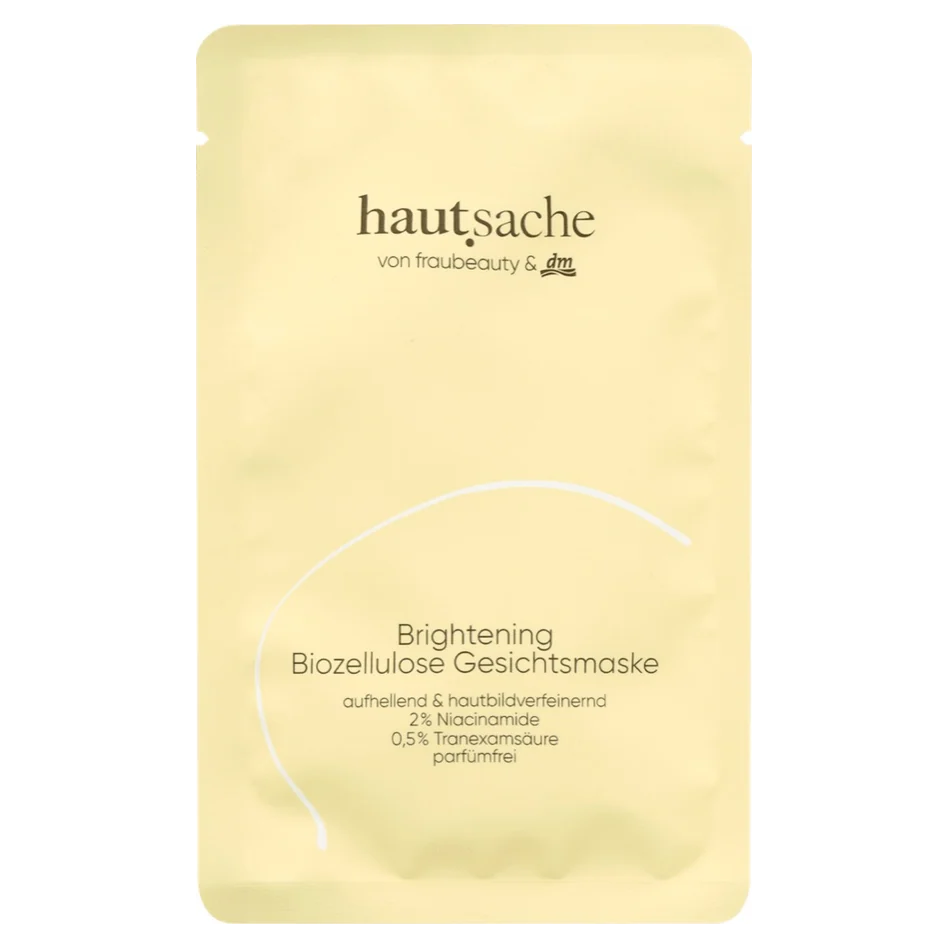
Tranexamic Acid
No meaningful concern for most people; irritation is possible but rare.
Also written as: TXA · Trans-4-(aminomethyl)cyclohexanecarboxylic acid
What it is
Tranexamic acid is a synthetic analogue of the amino acid lysine, developed as a prescription drug to reduce bleeding. Dermatologists noticed that patients taking it for other reasons saw their melasma fade, and it is now used topically in cosmetics. It appears to work by interrupting the signalling between skin cells and pigment cells that UV exposure and inflammation trigger, which makes it particularly relevant to melasma and post-inflammatory marks.
What it does well
Helps fade melasma and post-inflammatory pigmentation
Meta-analyses of randomised trials support tranexamic acid for melasma, with the strongest evidence for oral dosing under medical supervision. Topical cosmetic use shows benefit in trials but generally less than the oral route.
Moderate evidence
Worth knowing
Oral use is a medical decision, not a cosmetic one
Oral tranexamic acid carries a small clotting risk and is prescribed and monitored by doctors. Applying it to skin in a cosmetic does not carry that risk, but the two should not be confused.
Matters most toAnyone tempted to self-medicate with oral tranexamic acid for pigmentation, particularly people with clotting disorders or on hormonal contraception.
Where the EU stands
No specific restriction
Not listed in any restriction or prohibition annex of the EU Cosmetics Regulation when used topically in cosmetics; oral tranexamic acid is separately regulated as a medicine.
Sources (1)
Every link goes to the original: a journal, a PubMed record or an EU document.
- [1]Tranexamic acid as a therapeutic option for melasma management: meta-analysis and systematic review of randomized controlled trials
Journal of Dermatological Treatment · 2024 · doi:10.1080/09546634.2024.2361106
Pooled randomised trial data support tranexamic acid as an effective melasma treatment, with oral administration showing the most consistent benefit.