Ceramide AP
Ceramide 6 II
No meaningful concern for most people; irritation is possible but rare.
Also written as: Ceramide 6 II
What it is
Ceramides are the most abundant fat in the stratum corneum, the outermost layer of skin, where they stack with cholesterol and free fatty acids into the lamellar sheets that hold water in and keep irritants out. The letters in a ceramide's INCI name are a specification of its two halves rather than a grade. The first letter gives the fatty acid - N for a normal, non-hydroxy acid, A for an alpha-hydroxy acid, EO for an omega-hydroxy acid that carries a second fatty acid esterified on its far end. The second letter gives the sphingoid base - S for sphingosine, P for phytosphingosine, G for sphinganine. Ceramide AP is an alpha-hydroxy fatty acid joined to phytosphingosine. It was formerly called Ceramide 6 II, a name retired in 2014, and packs may still print either. The extra hydroxyl group on the fatty acid gives it more scope for hydrogen bonding than a plain N-type ceramide has, which is measurable in models of the barrier.
How it shows up on a label
Six masks here print it. Of the five whose lists show the point where ingredient order stops indicating quantity, four put it below that point; the exception is the Rosental Organics night mask, which prints it 17th of 44 rows, well above its own line. The sixth, the Schaebens Jelly Ceramide mask, shows no such point anywhere in its list, and it places the ingredient it is named after 4th of 29 rows - higher up its list than any other mask here puts it.
What it does well
Behaves differently from the sphingosine ceramides
In a hydrated model of the skin lipid barrier - each ceramide mixed in equal molar amounts with cholesterol and deuterated stearic acid - infrared spectroscopy found that the phytosphingosine ceramides NP and AP behaved fundamentally differently from the analogous sphingosine systems, and that both raised the temperature at which the fatty acid chains lose their order. This is a physical-chemistry result in a model rather than a clinical one, and it does not show that one letter works better on skin. What it does show is that a list naming several letters is not simply repeating itself.
Limited evidence
Restores a lipid the skin makes itself
Ceramide AP belongs to a subclass of ceramide found naturally in the stratum corneum, so it tops up a lipid the skin already produces. The Panel that assessed these ingredients commented that they would not be readily absorbed through the skin and are expected to remain in the stratum corneum. That is where the effect sits, and it is also the limit of it.
Moderate evidence
Worth knowing
Present at low levels
The highest maximum concentration reported to the CIR survey for products left on the skin was 0.2%, in skin care preparations. That figure names this ingredient directly. Ceramides are among the more expensive cosmetic raw materials, so a product may advertise them and still contain a fraction of a per cent. Where the name falls on the ingredient list is a rough guide to how much is really there.
Matters most toAnyone paying a premium specifically for ceramide content.
One subclass is not a barrier score
The familiar line that ceramides are depleted in eczema describes the overall profile, and the picture per subclass is more complicated than that. In an observational study of 213 children with atopic dermatitis, two of the twelve subclasses measured - the AS and NS types - were higher than in controls and tracked with severity. Reading any single ceramide on a label as a measure of barrier health is therefore a mistake, whichever letters it carries.
Matters most toAnyone choosing a mask by counting the ceramides on the list.
Where the EU stands
No specific restriction
Not listed in any Annex of the EU Cosmetics Regulation, so there is no specific concentration limit; it is still covered by the general safety assessment every cosmetic product must pass before sale.
Regulation (EC) No 1223/2009 - no annex entry · source ↗
Sources (4)
Every link goes to the original: a journal, a PubMed record or an EU document.
- [1]Safety Assessment of Ceramides as Used in Cosmetics
Cosmetic Ingredient Review Expert Panel · 2015
The Panel concluded that the ceramide ingredients, including this one, are safe in cosmetics in the present practices of use and concentration described in the assessment, and recorded that they are not restricted in any way under the rules governing cosmetic products in the European Union.
- [2]FTIR spectroscopic studies of lipid dynamics in phytosphingosine ceramide models of the stratum corneum lipid matrix
Chemistry and Physics of Lipids · 2005 · doi:10.1016/j.chemphyslip.2004.12.002
In a hydrated model of the barrier, the phytosphingosine-based ceramides NP and AP behaved fundamentally differently from the analogous sphingosine-based systems, so the letters mark a real physical difference rather than a naming convention.
- [3]Effects of sphingolipid extracts on the morphological structure and lipid profile in an in vitro model of canine skin
The Veterinary Journal · 2016 · doi:10.1016/j.tvjl.2016.03.020
Supplementing a cultured skin model with sphingolipid extract raised several ceramide subclasses, including AP, EOP, NS and AS, showing the subclasses respond as a group rather than singly.
- [4]Skin Ceramide Profile in Children With Atopic Dermatitis
Dermatitis · 2018 · doi:10.1097/DER.0000000000000392
In 213 children, two of the twelve ceramide subclasses measured - the AS and NS types - were higher than in controls and tracked with disease severity, so a single subclass does not read as a barrier score.
Masks that contain Ceramide AP
Biodance
Hydro Cera-nol Real Deep Mask
59th of 65 on the label
below ≈1%
COSRX
The Alpha-Arbutin Discoloration Care Hydrogel Mask
40th of 44 on the label
below ≈1%
COSRX
The Peptide Collagen Lifting Glow Hydrogel Mask
40th of 49 on the label
below ≈1%
Dear, Klairs
Rich Moist Soothing Tencel Sheet Mask
19th of 33 on the label
below ≈1%
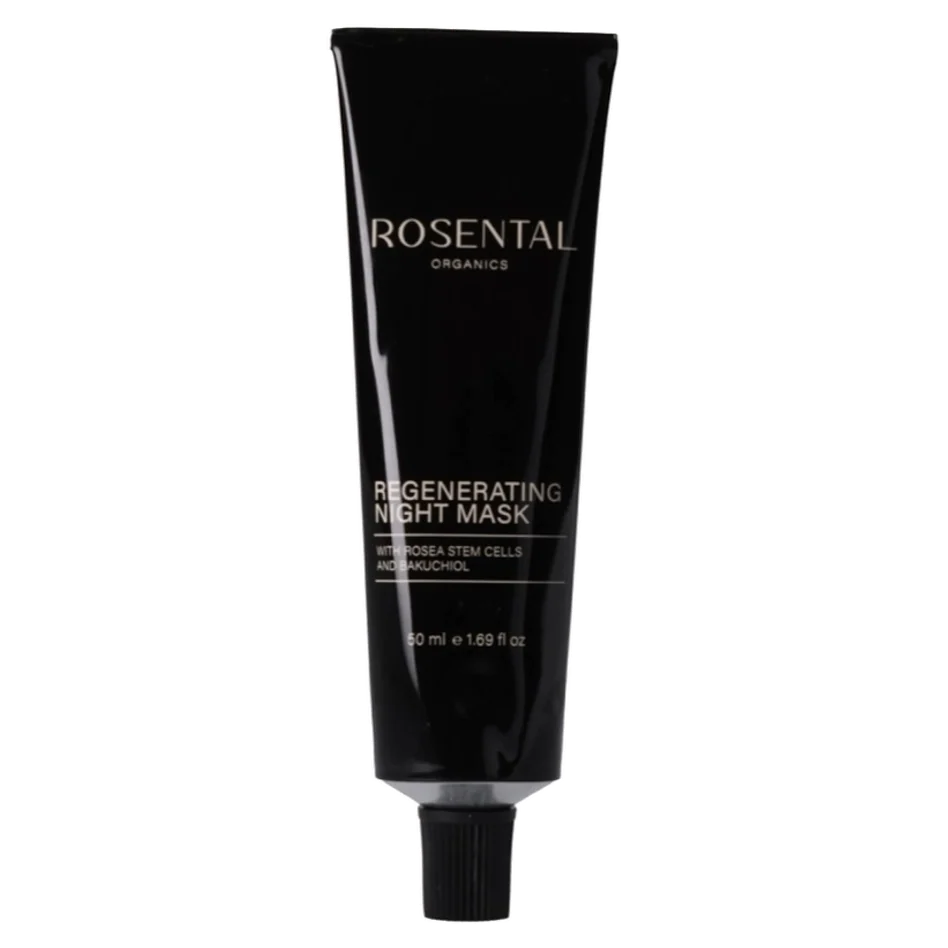
Rosental Organics
Regenerating Night Mask
17th of 44 on the label
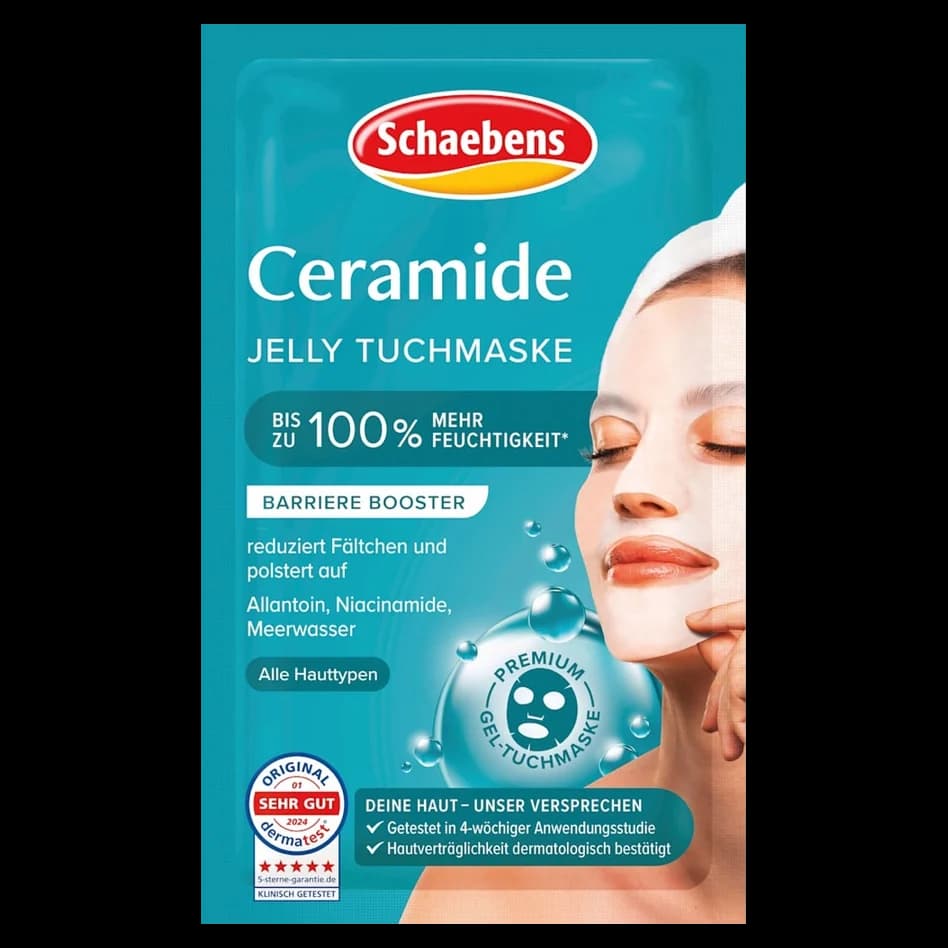
Schaebens
Tuchmaske Jelly Ceramide
4th of 29 on the label