BHA
Butylated hydroxyanisole
EU-restricted, a common contact allergen, or subject to live debate.
Also written as: Butylated Hydroxyanisole · tert-Butyl-4-methoxyphenol · tert-Butyl-4-hydroxyanisole
What it is
BHA is the INCI name of butylated hydroxyanisole, tert-butyl-4-methoxyphenol, a phenolic antioxidant made of two closely related isomers. It is there to protect the formula rather than the skin: it stabilises free radicals and so slows the oxidation of fats and oils, essential oils in particular, which is what extends a product's shelf life. CosIng records its functions as antioxidant and fragrance. The letters cause a recurring mix-up. In marketing, BHA means beta hydroxy acid, which in practice means salicylic acid, but salicylic acid is printed on a pack as Salicylic Acid. When an ingredient list says BHA, it means this antioxidant, which shares nothing with the acid beyond the abbreviation.
How it shows up on a label
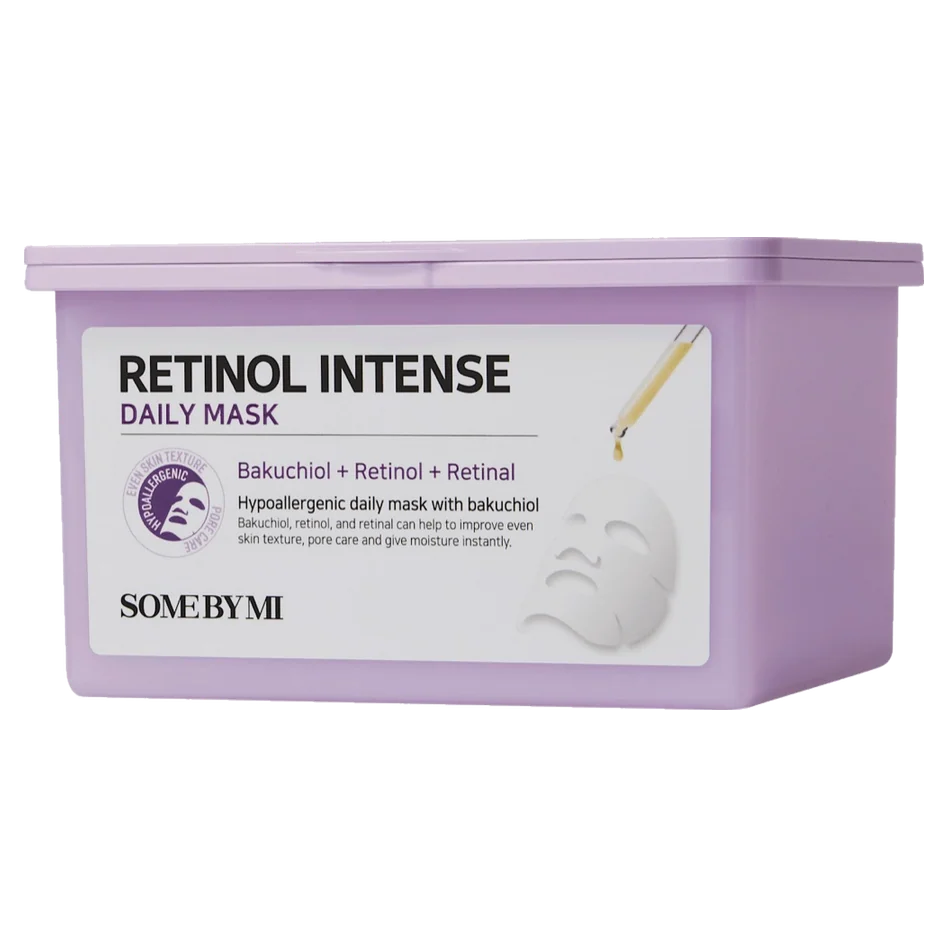
Printed on one mask here, SOME BY MI's Daily Retinol Intense, at 51st of 62 - far below the point where ingredient order stops indicating quantity - and directly before BHT, a closely related antioxidant. That mask's list contains no salicylic acid; the BHA on it is this antioxidant.
What it does well
Keeps oils in the formula from oxidising
This is a benefit to the product, not to your skin. The SCCS notes that cosmetic products often contain synthetic antioxidants like BHA to prevent the oxidation of fats and oils, mostly essential oils, because its aromatic ring can stabilise free radicals.
Moderate evidence
Worth knowing
Reviewed as a possible endocrine disruptor; the SCCS found the evidence not robust
BHA is one of the substances the Commission sent to the SCCS over potential endocrine-disrupting properties. In its advice of March 2026 the SCCS found weak anti-oestrogenic activity and, in animal studies of limited quality, some effects on sperm, but judged that the overall evidence was not robust enough to clearly suggest an endocrine mode of action. Its conclusion is that BHA is safe in leave-on and rinse-off cosmetics up to 0.07%. That advice covers products applied to the skin only - not oral-care products, and not anything that could be breathed in.
Matters most toAnyone following the EU's endocrine-disruptor reviews, and anyone choosing products for use during pregnancy - the SCCS found the reproductive studies, many of them old, not robust enough to base a risk assessment on.
Causes tumours in rodents at high doses, in an organ people do not have
IARC classed BHA as possibly carcinogenic to humans (Group 2B), after reviewing it in 1985, on the strength of animal studies, and the US National Toxicology Program lists it as reasonably anticipated to be a human carcinogen. The tumours form in the forestomach of rats and other rodents, an organ humans lack, and appear to follow local cell damage at high doses. The SCCS concluded that, at the low concentrations used in cosmetics, carcinogenicity is not a concern for the consumer.
An occasional contact allergen
In patch-test series, most of them decades old, up to about 2% of the patients tested reacted to BHA, and in some series none did. The SCCS reads this as evidence that BHA can cause allergic contact dermatitis, but regards the risk of skin sensitisation from BHA in cosmetics as negligible.
Matters most toPeople who have tested positive to BHA in a patch test.
Where the EU stands
No specific restriction
BHA appears in no annex of the Cosmetics Regulation as consolidated on 18 May 2026, so today the EU sets no limit for it: the consolidated text contains neither its name nor any of its three CAS numbers. That is expected to change but has not yet. A draft Commission Regulation sent to the Council on 21 September 2026 would restrict BHA to the 0.07% the SCCS judged safe. Until it is adopted and published in the Official Journal it is a proposal, not law, and no date for it can be given.
Regulation (EC) No 1223/2009 - no annex entry (restriction proposed in draft Commission Regulation D117774/02, Council document 13462/26, not adopted) · source ↗
Sources (4)
Every link goes to the original: a journal, a PubMed record or an EU document.
- [1]Scientific advice on the safety of Butylated Hydroxyanisole (BHA) as a substance with potential endocrine disrupting properties in cosmetic products, SCCS/1682/25
SCCS (Scientific Committee on Consumer Safety), European Commission · 2026
Final version adopted in plenary on 26 March 2026. Conclusion: "the SCCS considers the use of BHA in leave-on and rinse off cosmetic products up to a concentration of 0.07% as safe", for dermally applied products only, "not in oral care products or cosmetic products which may lead to exposure of the end-user's lungs by inhalation". On endocrine activity, the overall evidence "is not robust enough to clearly suggest an endocrine mode of action". Forestomach tumours in rodents are "considered not relevant for humans because of the absence of a forestomach", and "carcinogenicity of BHA is not considered a concern for the consumer" at the intended low use concentration. The SCCS regards "the risk of skin sensitisation from exposure to BHA in cosmetics as negligible". Reproductive studies indicated effects on sperm, neurobehavioural development and possible malformations, but "neither study was considered sufficiently robust" to set a point of departure. Checked 8 October 2026.
- [2]Draft Commission Regulation amending Regulation (EC) No 1223/2009 as regards the use in cosmetic products of certain substances, including those classified as carcinogenic, mutagenic or toxic for reproduction (D117774/02), Council document 13462/26
Council of the European Union (cover note from the European Commission, 21 September 2026) · 2026
A draft, undated and unnumbered ("COMMISSION REGULATION (EU) .../... of XXX"). Recital (8): Butylated Hydroxyanisole "is not regulated by Regulation (EC) No 1223/2009" and is "used as a fragrance ingredient and an antioxidant in cosmetic products to prolong their shelf life". Recital (14): its use "should therefore be restricted to the maximum concentration proposed by the SCCS" - recital (13) gives that as 0.07%. Article 2: it enters into force on the twentieth day after publication in the Official Journal, which has not happened. Checked 8 October 2026.
- [3]CosIng entry: BHA
European Commission, CosIng database
INCI name BHA, chemical name tert-butyl-4-methoxyphenol, CAS 25013-16-5, EC 246-563-8. Functions: antioxidant; fragrance. No annex number or cosmetic restriction recorded. Checked 8 October 2026.
- [4]Regulation (EC) No 1223/2009 on cosmetic products, consolidated text of 18 May 2026
Official Journal of the European Union · 2026
A search of the full English consolidated text finds no occurrence of hydroxyanisole, butylated, the INCI name BHA, or the CAS numbers 25013-16-5, 121-00-6 and 88-32-4 as standalone numbers. Read from the Publications Office copy of the same consolidation because EUR-Lex was not serving. Checked 8 October 2026.