Dicaprylyl Carbonate
No meaningful concern for most people; irritation is possible but rare.
Also written as: Carbonic Acid, Dicaprylyl Ester
What it is
Dicaprylyl carbonate is the diester of carbonic acid and caprylyl alcohol: two eight-carbon chains joined through a carbonate group. The trade material tested for its safety review was 96.6% pure and in practice a mix of carbonates with six-, eight- and ten-carbon chains; it is a liquid that melts at -22 °C and barely dissolves in water, at 0.1 mg per litre. CosIng records it as a skin-conditioning emollient, and the Cosmetic Ingredient Review adds solvent. It is by far the most frequently registered of the six dialkyl carbonates that review assessed: 384 US registrations in 2016, 334 of them left on, and in a 2015 industry survey it was used at up to 34.5% in eye shadow. In this catalogue it is printed on seven European masks, five of them listing it above the point where ingredient order stops indicating quantity.
How it shows up on a label
Fourth on Balea's retinol cream mask and Dermasel's Dead Sea anti-age sheet mask, sixth on Balea med's panthenol sheet mask, ninth on Schaebens' panthenol cream mask and tenth on Garnier's pro-retinol tissue mask - above the point where ingredient order stops indicating quantity on all five. On Garnier's salicylic and hyaluronic acid tissue masks it is eleventh, below that point.
What it does well
Serves as the emollient in the formula
Emollient is the function CosIng records for it, under skin conditioning, and the Cosmetic Ingredient Review lists emollient and solvent. This is the role it is added for, not a measured effect of these masks on skin.
Strong evidence
Reviewed as safe when formulated to be non-irritating
The Cosmetic Ingredient Review concluded in December 2016 that dicaprylyl carbonate and five related carbonates are safe in the present practices of use and concentration when formulated to be non-irritating. For dicaprylyl carbonate the data were a negative Ames test at up to 5,000 µg per plate, a 13-week oral study in rats with a no-observed-effect level of at least 1,000 mg/kg a day, a guinea pig test that classed it as a non-sensitiser, and a 108-person repeat patch test of a product with about 31% (104 assessed for sensitisation) that caused no irritation and no sensitisation.
Moderate evidence
Worth knowing
The safety conclusion carries an irritation caveat
The review's conclusion holds only when the product is formulated to be non-irritating, and its discussion says why: the panel "expressed concern about the irritation potential of dialkyl carbonates", because some animal studies of the group found slight to well-defined irritation. The dicaprylyl carbonate trade material was classed as slightly irritating to rabbit skin - very slight redness in all six animals after a 4-hour patch, lasting up to 3 days in two, with scaling in three - and slightly irritating to rabbit eyes. In people, a 24-hour patch of the undiluted material on 20 volunteers produced no reactions. In a four-week use test, 52 women applied a body, face and hair oil with about 31% to face and body once a day: three had redness and seven had flaking, all of it on the face, and at the final check two still had redness and five flaking. The authors judged the irritation potential very low, and the panel set that result against the animal findings.
Matters most toPeople whose facial skin reddens or flakes easily.
Where the EU stands
No specific restriction
Not restricted for cosmetic use in the EU: dicaprylyl carbonate appears in no annex of the Cosmetics Regulation as consolidated on 18 May 2026, and CosIng records no restriction for it. The carbonates that do appear in the annexes are unrelated substances, such as metal carbonates and alkyne fragrance esters.
Regulation (EC) No 1223/2009 - no annex entry · source ↗
Sources (4)
Every link goes to the original: a journal, a PubMed record or an EU document.
- [1]Safety Assessment of Dialkyl Carbonates as Used in Cosmetics - final report
Cosmetic Ingredient Review · 2017
Final report released 18 January 2017 after the December 5-6, 2016 Panel meeting; this copy is held by the US FDA. Conclusion: "the following 6 dialkyl carbonates are safe in the present practices of use and concentration, as described in this safety assessment, when formulated to be non-irritating", the first being Dicaprylyl Carbonate, "the diester of carbonic acid and caprylyl alcohol", functions "Skin-Conditioning Agents - Emollient; Solvents". The trade material is "96.6% pure" and "consists of symmetric and unsymmetric carbonates (comprising C6, C8, and C10 chain lengths)"; "White liquid", water solubility "0.1" mg/L, melting point -22 °C. 2016 VCRP: "384 formulations, mostly leave-on products" (334 leave-on); maximum use "up to 34.5% in leave-on products (eye shadow)". Ames negative "at doses up to 5000 µg/plate"; 13-week oral rat study NOEL "≥ 1000 mg/kg/day"; Buehler test "classified as a non-sensitizer"; HRIPT of ~31% in 108 subjects: "did not cause primary or cumulative irritation or cutaneous sensitization". Rabbit skin, 4-h semi-occlusive: "Very slight erythema was observed in all animals after 1 h of exposure, but persisted for up to 3 days in 2 animals only", "scaling persisted in 3 animals", "slightly irritating"; rabbit eye "slightly irritating". Human 24-h occlusive patch, 20 volunteers: "No reactions were observed". 4-week use test of a body, face and hair oil with ~31% in 52 women: on face or body "erythema was observed in 3 subjects and desquamation was observed in 7 subjects; irritation was observed only on the face"; at the final observation 2 and 5; "very low cutaneous irritation potential". Discussion: "The Panel expressed concern about the irritation potential of dialkyl carbonates. Although some studies of these ingredients reported slight to well-defined irritation in animals, a study using a cosmetic investigational product containing 31% Dicaprylyl Carbonate indicated very low cutaneous irritation potential." Checked 10 October 2026.
- [2]Quick Reference Table: CIR conclusions by ingredient
Cosmetic Ingredient Review · 2024
Lists Dicaprylyl Carbonate with conclusion SQ (safe with qualifications): "The CIR Expert Panel concluded that the following 6 dialkyl carbonates are safe in the present practices of use and concentration, as described in this safety assessment, when formulated to be non-irritating", citation "Final Report 12/2016 Available from CIR". Checked 10 October 2026.
- [3]CosIng entry: Dicaprylyl Carbonate
European Commission, CosIng database
INCI name DICAPRYLYL CARBONATE, status active, chemical name "Carbonic Acid, Dicaprylyl Ester", CAS 1680-31-5. Functions: skin conditioning - emollient; skin conditioning. No annex number, cosmetic restriction or maximum concentration is recorded. Checked 10 October 2026.
- [4]Regulation (EC) No 1223/2009 on cosmetic products, consolidated text of 18 May 2026
Official Journal of the European Union · 2026
A sweep of the full consolidated text finds no occurrence of dicaprylyl carbonate, dioctyl carbonate or CAS 1680-31-5. Every occurrence of the word carbonate belongs to an unrelated substance - nickel, cobalt and cadmium carbonate and three unrelated organic carbonates in Annex II, alkyne fragrance esters such as methyl heptine and methyl octine carbonate in Annex III, and calcium and magnesium carbonate as colourants in Annex IV. Checked 10 October 2026.
Masks that contain Dicaprylyl Carbonate
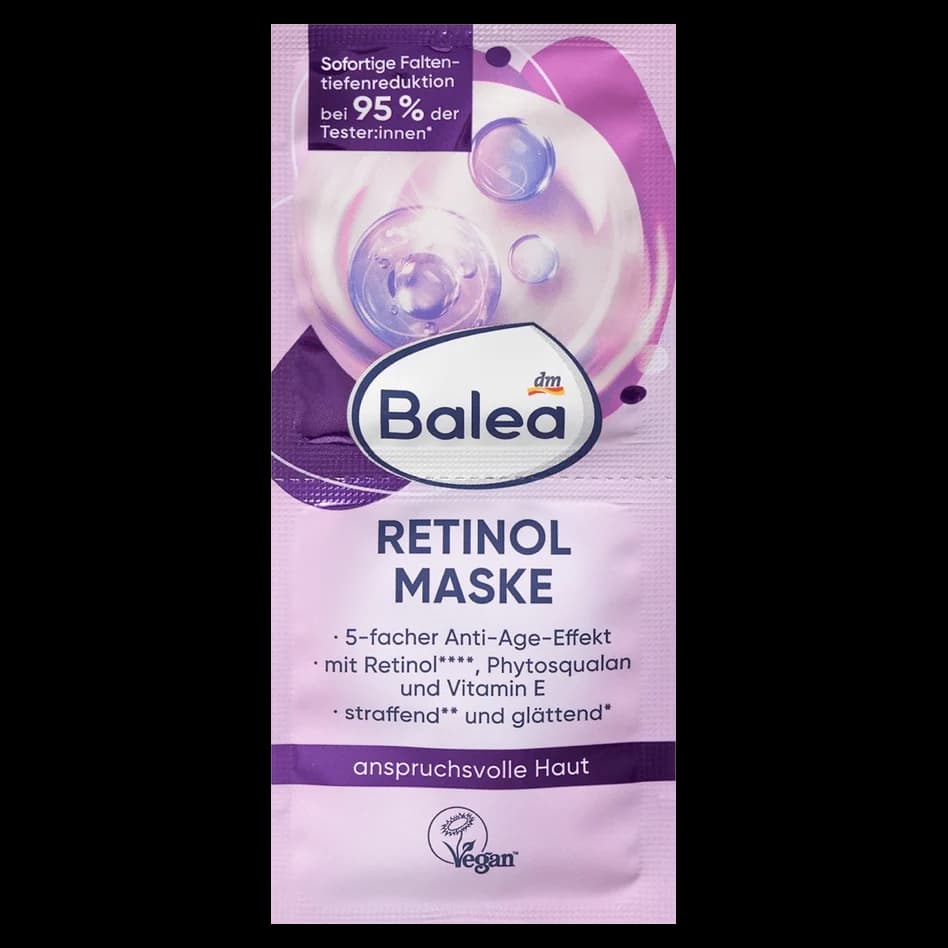
Balea
Gesichtsmaske Retinol
4th of 23 on the label
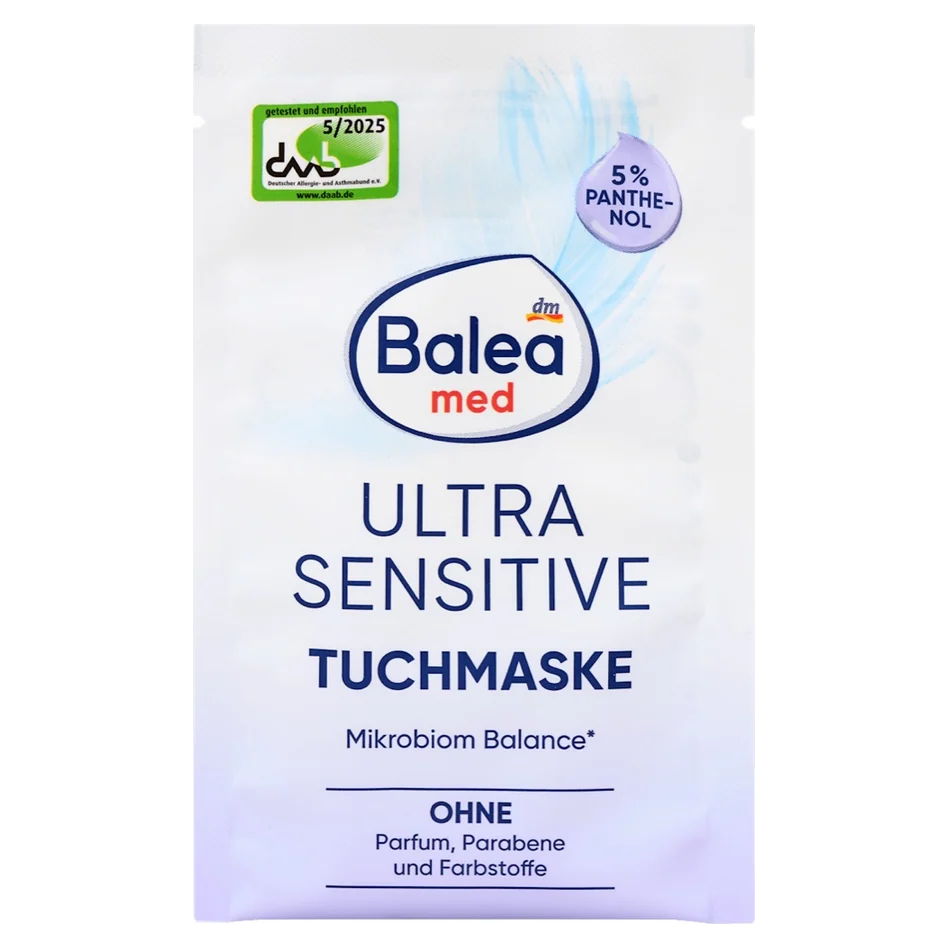
Balea med
Tuchmaske Panthenol Ultra Sensitive
6th of 16 on the label
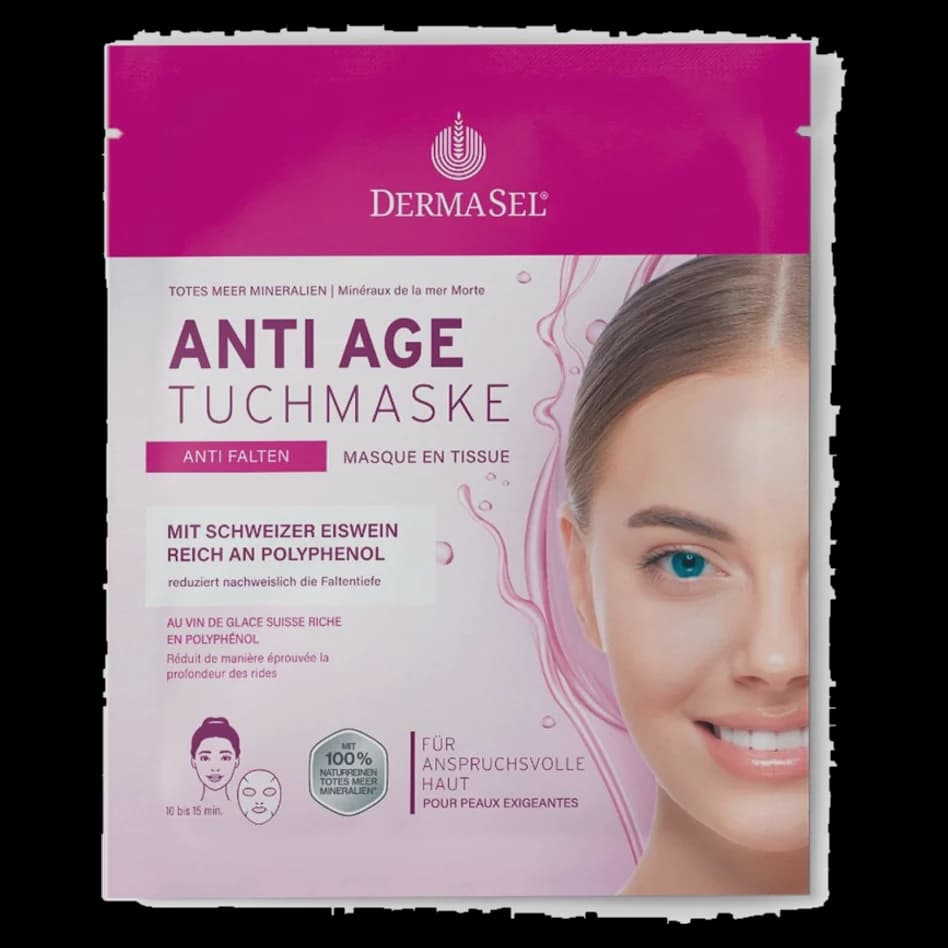
DERMASEL
Totes Meer Anti-Age Tuchmaske
4th of 23 on the label
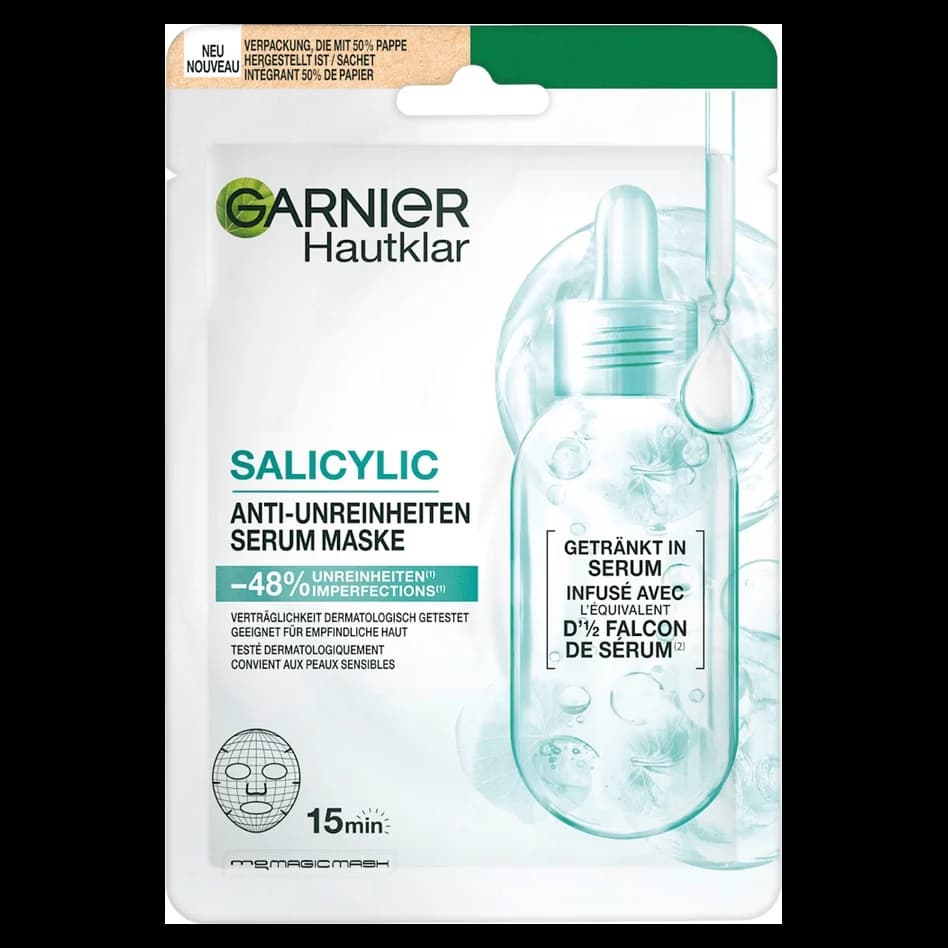
Garnier
Salicylic Tissue Mask
11th of 26 on the label
below ≈1%
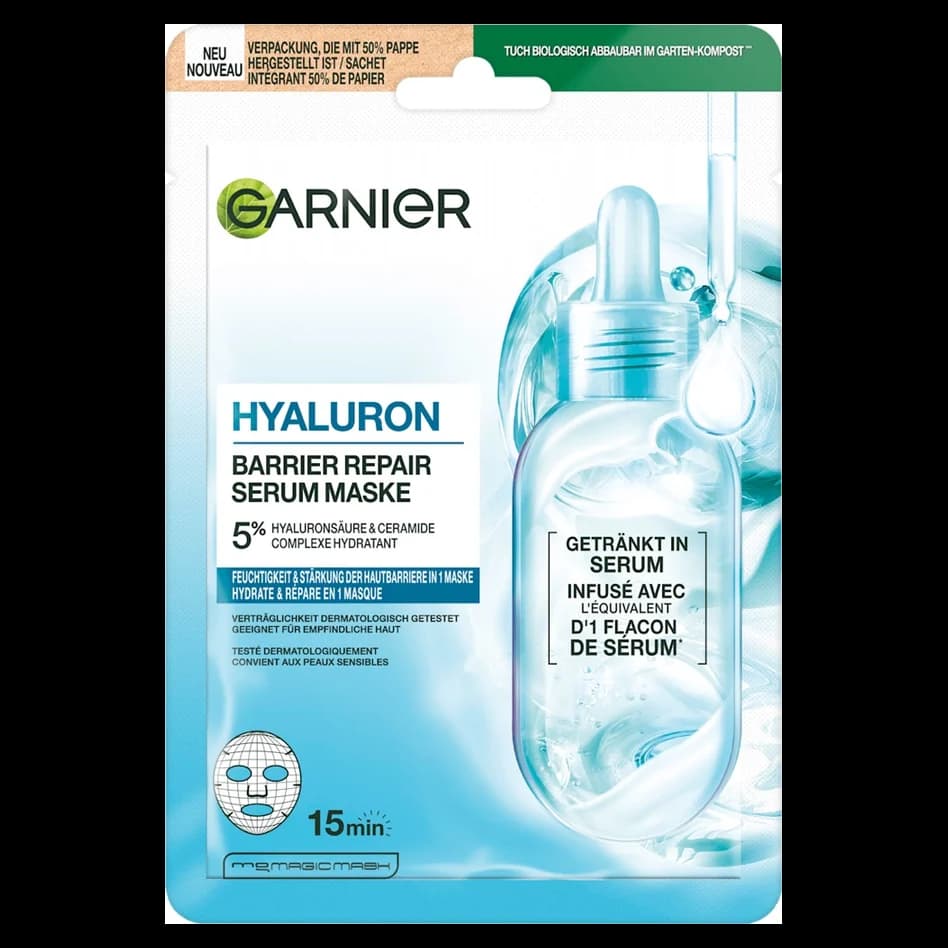
Garnier
SkinActive Hyaluronic Acid Barrier Repair Serum Tissue Mask
11th of 25 on the label
below ≈1%
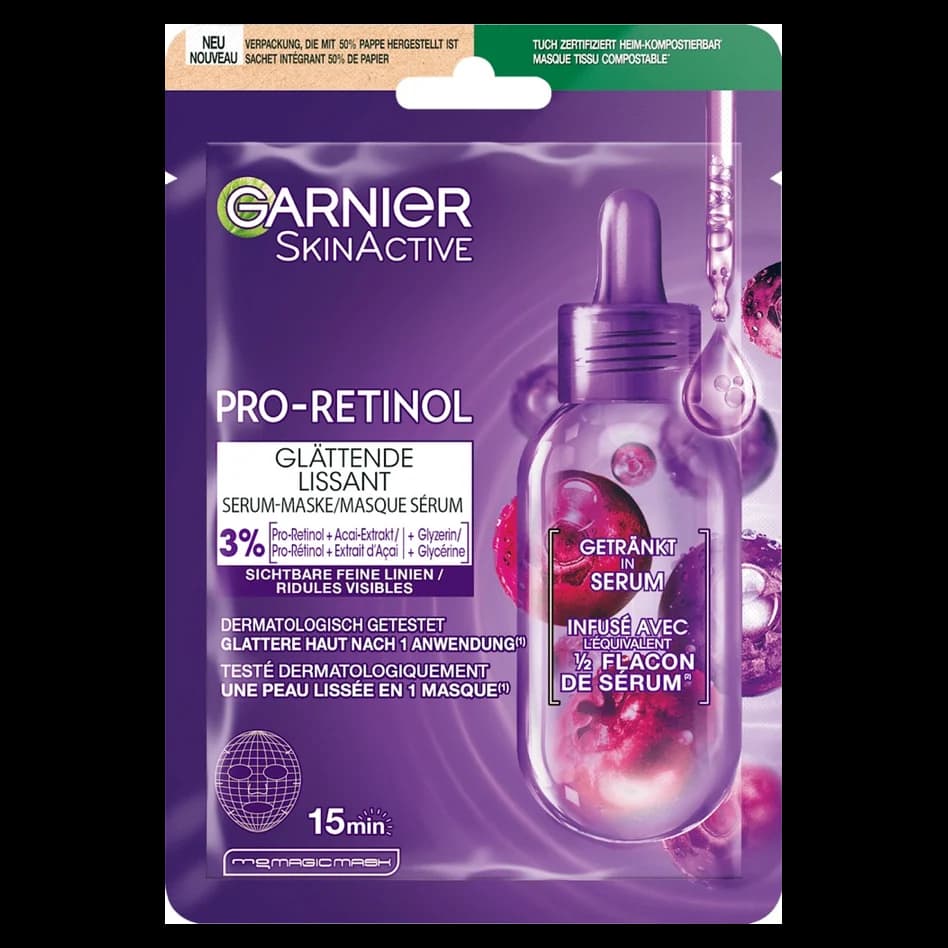
Garnier
SkinActive Pro-Retinol Tissue Mask
10th of 24 on the label
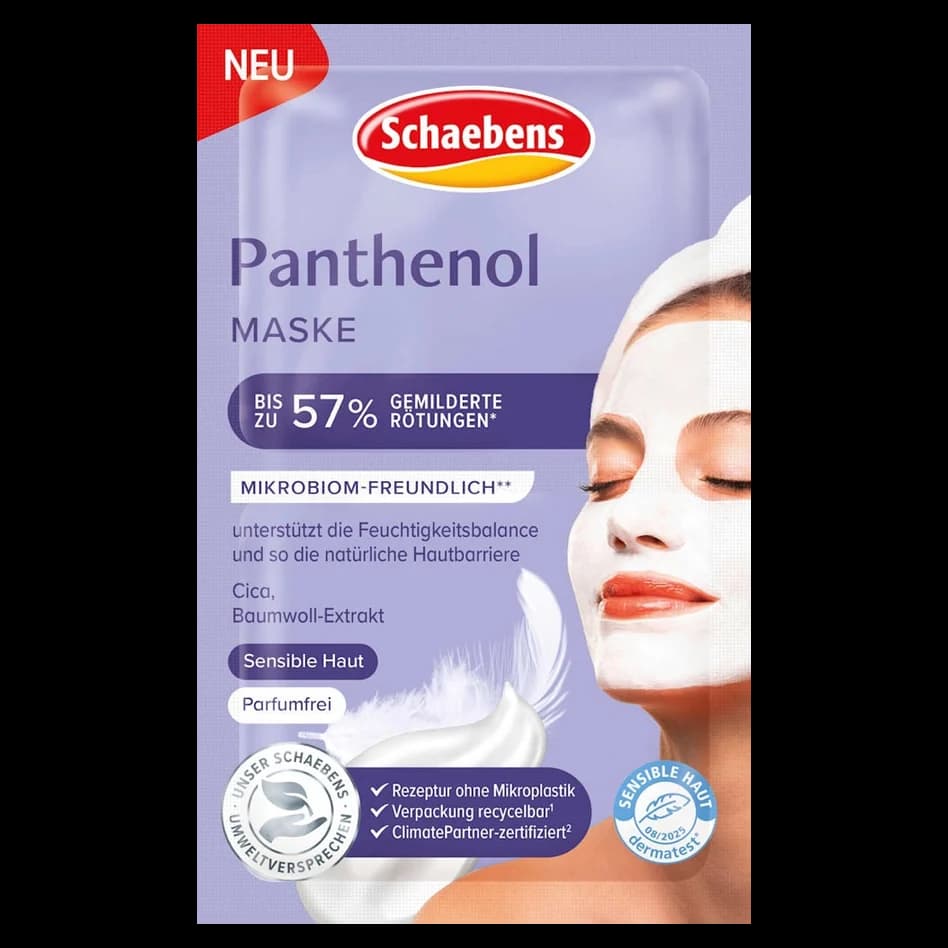
Schaebens
Gesichtsmaske Panthenol
9th of 22 on the label