Magnesium Ascorbyl Phosphate
No meaningful concern for most people; irritation is possible but rare.
What it is
Magnesium ascorbyl phosphate is ascorbic acid - vitamin C - with a phosphate group attached, in the form of a magnesium salt; the EU's CosIng database describes it as ascorbyl monophosphate magnesium salt. The phosphate sits at the 2 position of the molecule, and that is the point of it: in a 1997 comparison with ascorbic acid and ascorbyl palmitate, the phosphate group was what protected the molecule from break-up of its enediol system. Sodium ascorbyl phosphate is its sodium counterpart, and the two were assessed together with ascorbic acid and three other ascorbates in a single 2005 safety review. Its listed functions are antioxidant and skin conditioning.
How it shows up on a label
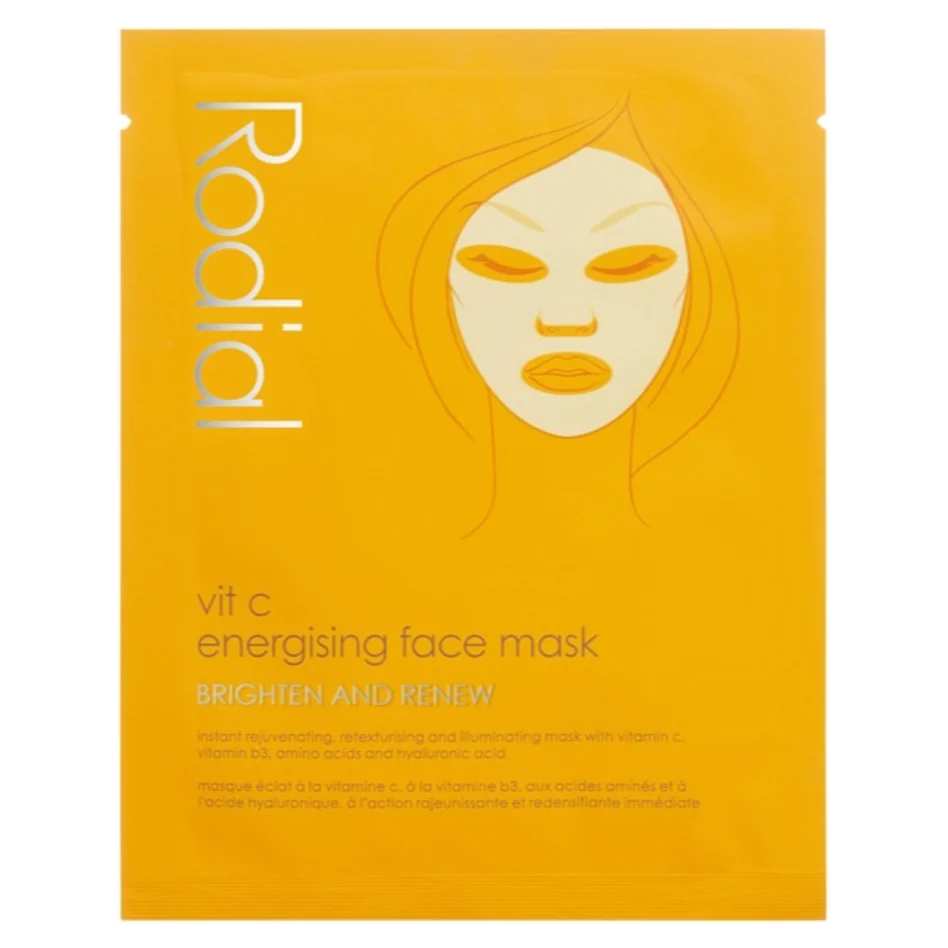
One mask here lists it, 27th of 30 entries, among the last few rows. The 2005 safety review recorded cosmetic use from 0.001 to 3%.
What it does well
More stable than ascorbic acid in a formula
In the 1997 study, magnesium ascorbyl phosphate and ascorbyl palmitate were both more stable than ascorbic acid, in solution and in topical formulations - but they did not behave alike. The palmitate ester still hydrolysed in solution and in emulsion, and only products with high viscoelastic properties reduced that. The phosphate held, which the authors took as confirming it as a very stable derivative of vitamin C that may be easily used in various types of cosmetic products.
Limited evidence
Reviewed as safe with ascorbic acid and the other ascorbates
The Cosmetic Ingredient Review panel assessed it in 2005 with ascorbic acid and four other ascorbates, and its conclusion for the group is that they are safe in the present practices of use and concentration; reported use of magnesium ascorbyl phosphate ran from 0.001 to 3%. Because the six are structurally and functionally alike, the Panel treated data on one as applying to all, and judged that the group does not present a risk of skin sensitisation - resting that on clinical use of ascorbic acid on damaged skin without adverse effects and a negative repeat-insult patch test with 5% ascorbic acid.
Moderate evidence
Worth knowing
Little got through skin in the one quantitative study, and how much becomes vitamin C is unquantified
The one quantitative penetration study on this ingredient in the 2005 review applied a 3% cream spiked with radiolabelled magnesium ascorbyl phosphate to human cadaver skin: penetration was low, 0.09 to 0.51% of the applied dose, and the review's text reports 0.58% of the label in the skin itself. An older study in the same review shows that some does become vitamin C, at least in animals: in guinea pigs on a scurvy-inducing diet, a cream of it applied to the clipped skin of the back prevented scurvy, though somewhat more weakly than ascorbic acid, and ascorbic acid was found between the cells of the treated skin. None of the sources quantifies how much converts, and much of the review's data concern ascorbic acid itself, extended to this ingredient on the strength of structural similarity. So the name on the label is a real but unmeasured promise in human skin.
Matters most toAnyone buying a mask specifically for vitamin C rather than for the rest of the formula.
Metal ions can turn the group from antioxidant to pro-oxidant
The Panel flagged a formulation point for all six ingredients: certain metal ions may combine with them to produce pro-oxidant activity, the opposite of what they are there for, so it cautioned formulators to be certain that they are acting as antioxidants in the product. That is the manufacturer's responsibility, and nothing on an ingredient list shows whether it was met.
Matters most toFormulators more than wearers; it is here because the Panel thought it worth saying.
Its reproductive data are borrowed from ascorbic acid
The 2005 review's summary of its reproductive data is that pregnant mice and rats given daily oral doses of ascorbic acid up to 1000 mg/kg body weight showed no indications of adult-toxic, teratogenic or fetotoxic effects. Its reproductive section covers ascorbic acid and sodium ascorbate and reports no study of magnesium ascorbyl phosphate itself; the Panel extended the group's data to every member because the ingredients are structurally and functionally alike. The pregnancy note here rests on that extrapolation.
Matters most toAnyone pregnant who wants to know what a 'generally considered safe' rating rests on.
Where the EU stands
No specific restriction
Not restricted under the EU Cosmetics Regulation: magnesium ascorbyl phosphate appears in no annex and carries no concentration limit, and its CosIng record gives no annex reference.
Regulation (EC) No 1223/2009 - no annex entry · source ↗
Sources (5)
Every link goes to the original: a journal, a PubMed record or an EU document.
- [1]Final report of the safety assessment of L-Ascorbic Acid, Calcium Ascorbate, Magnesium Ascorbate, Magnesium Ascorbyl Phosphate, Sodium Ascorbate, and Sodium Ascorbyl Phosphate as used in cosmetics
Cosmetic Ingredient Review, International Journal of Toxicology 24(Suppl 2) · 2005 · doi:10.1080/10915810590953851
The six ingredients "function in cosmetic formulations primarily as antioxidants"; "Magnesium Ascorbyl Phosphate functions as an antioxidant in cosmetics and was reported being used at concentrations from 0.001% to 3%." "Because of the structural and functional similarities of these ingredients, the Panel believes that the data on one ingredient can be extrapolated to all of them." The Panel "cautioned formulators to be certain that these ingredients are acting as antioxidants in cosmetic formulations" because certain metal ions may combine with them "to produce pro-oxidant activity". Clinical use on damaged skin and a negative RIPT with 5% ascorbic acid support "the finding that this group of ingredients does not present a risk of skin sensitization". On reproduction, for the group: "Pregnant mice and rats were given daily oral doses of Ascorbic Acid up to 1000 mg/kg bw with no indications of adult-toxic, teratogenic, or fetotoxic effects" - data on ascorbic acid, which the Panel extrapolated across the group. Penetration (full text, citing Kameyama et al. 1996): "The percutaneous penetration of the radiolabeled VC-PMG was low, ranging from 0.09% to 0.51% of the applied dose. The amount of the radiolabel in the entire skin after topical application of the cream was 0.58%". Topical conversion in animals (Imai et al. 1967, guinea pigs): "15 mg/animal/day of Magnesium Ascorbyl Phosphate (0.5 g cream/day) prevented the development of scurvy; the activity of Magnesium Ascorbyl Phosphate was somewhat weaker than that of L-Ascorbic Acid", and "The applied skin of the backs in the treated groups indicated the existence of Ascorbic Acid in the intercellular space of the epithelium". Also reported, in animals only: hairless mice "were given an intraperitoneal injection of 100 mg/kg" before an acute UVB exposure, and "The administration of 50 mg/kg of MAP immediately after the same exposure in hairless mice significantly delayed skin tumor formation and hyperplasia induced by chronic exposure to 2 kJ/m2 of UVB" - the review gives no route for that 50 mg/kg arm. Checked 14 October 2026.
- [2]Safety Assessment of Ascorbyl Glucoside and Sodium Ascorbyl Glucoside as Used in Cosmetics (final report for Panel review)
Cosmetic Ingredient Review, Expert Panel for Cosmetic Ingredient Safety · 2020
Cited here for the 2005 report's conclusion, which the abstract does not state in one line. The introduction lists "The final report on the safety assessment of L-Ascorbic Acid, Calcium Ascorbate, Magnesium Ascorbate, Magnesium Ascorbyl Phosphate, Sodium Ascorbate, and Sodium Ascorbyl Phosphate was published in 2005" among three earlier reports, and states that "the Panel's conclusion in each report is that these ingredients are safe in the present practices of use and concentration, as described in the safety assessment". Checked 14 October 2026.
- [3]Stability of vitamin C derivatives in solution and topical formulations
Journal of Pharmaceutical and Biomedical Analysis · 1997 · doi:10.1016/s0731-7085(96)01904-8
Compared ascorbic acid, ascorbyl palmitate and magnesium ascorbyl phosphate by HPLC: "the two vitamin C derivatives were more stable than ascorbic acid", but palmitate esterification "did not prevent hydrolysis of the molecule, either in solution or in emulsion", whereas "the introduction of the phosphoric group in 2 position protected the molecule from break-up of the enediol system, confirming VC-PMG as a very stable derivative of vitamin C that may be easily used in various types of cosmetic products". Checked 14 October 2026.
- [4]CosIng entry: Magnesium Ascorbyl Phosphate
European Commission, CosIng database
INCI name MAGNESIUM ASCORBYL PHOSPHATE, chemical description "Ascorbyl monophosphate magnesium salt", CAS 114040-31-2 / 113170-55-1. Functions: antioxidant; skin conditioning. No annex number or cosmetic restriction recorded. Checked 14 October 2026.
- [5]Regulation (EC) No 1223/2009 on cosmetic products, consolidated text of 18 May 2026
Official Journal of the European Union · 2026
A search of the full English consolidated text finds no occurrence of ascorbyl, ascorbic, or the CAS numbers 114040-31-2 and 113170-55-1. Read from the Publications Office copy of the same consolidation because EUR-Lex was not serving. Checked 14 October 2026.